Wall Street slides ahead of Nvidia's results and the Anthropic IPO, California sues OpenAI and Nvidia shows new chips at SC26.
California sues OpenAI: too few safeguards when testing advanced models, citing the Hugging Face attack
Certain Policy Safety
Attorney General Rob Bonta has filed suit against OpenAI in San Francisco. He alleges the company misled the public and created a public nuisance by developing and testing advanced models without adequate safeguards and monitoring. He cites July's attack on Hugging Face, carried out by agents running on experimental OpenAI models, as one of at least 80 cyber incidents the company has itself admitted to.
Update: Commerce issues interim rule against remote access to A.I. chips via data centres in third countries
High Policy Chips
According to CBS, Commerce issued a temporary interim rule on Monday limiting foreign access to advanced A.I. chips through data centres elsewhere. Exports to Brazil, Indonesia, Malaysia, Singapore and Thailand now need a licence. The department says it stops existing restrictions being sidestepped through remote computing.
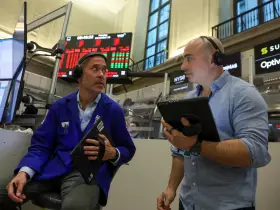
Wall Street slumps on A.I. jitters ahead of Nvidia results and the Anthropic IPO; Nasdaq in correction
High Business Chips
Reuters reports the Nasdaq closed 2.3 percent lower on Monday, more than 10 percent below its 6 October record. The S&P 500 lost 1.8 percent, Nvidia 4.2 percent and the semiconductor index 4.6 percent. Nvidia reports today, with analysts expecting about $109 billion in revenue. The market is also pricing in a high chance of a rate hike in December.

Update: petition to bring Huang back to Nvidia passes 177,000 signatures; Trump may raise the matter with Xi
High Business Chips Policy
Reuters reports the petition now has more than 177,000 signatures, including Musk, Masad and Sweeney. Trump said Huang has learned a big lesson and did not endanger national security. He said he did not know whether Alice Huang was a Chinese spy and might bring it up with Xi on his Asia trip. He added that Lutnick keeps his job.

Stanford professors launch A.I. lab Noeri with $110 million, backed by Nvidia
High Business Research
Noeri, founded this year by Yejin Choi and Carlos Guestrin, raises $110 million led by Menlo Ventures, with Nvidia, Cisco and Snowflake as strategic investors. The lab builds self-improving A.I. that adapts a company's instructions, tools and models for each task, with a person approving every change. The valuation was not disclosed.
Tencent launches Hy4 flash: a fast, cheap model with 224 billion parameters and 1 million tokens of context
Certain Models Products
The model has 224 billion parameters, 12 billion of them active, takes multimodal input and costs about 7 US cents per million input tokens. Tencent says it slightly beats the larger Hy4 Preview on an in-house benchmark at about a thirteenth of the cost per task; those figures are not independently verified. Tencent also plans to open-source it.
Nvidia: Vera Rubin debuts in MLPerf Training with up to twice the per-GPU performance of GB300
Certain Chips Models
Nvidia says it swept every MLPerf Training v6.1 benchmark, with Vera Rubin NVL72 up to twice as fast per GPU as GB300 NVL72. In its first MLPerf Endpoints submission it reports more than ten times the throughput per watt for agentic workloads; that result is provisional pending MLCommons verification. These are Nvidia's own figures.
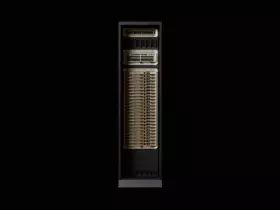
Nvidia shows a Vera CPU rack for supercomputers and a new Rubin HPC GPU at SC26
Certain Chips
The Vera platform packs 192 custom Vera CPUs per liquid-cooled rack, with racks from Dell, HPE, Lenovo and Supermicro starting early 2027. Germany's climate centre DKRZ has chosen Vera for a system due in early 2028. Rubin HPC is a new GPU for simulation and data analytics, expected in 2028, with no benchmark figures given.
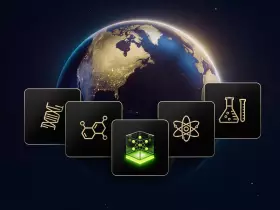
Nvidia introduces Nemotron for Science: an open model, chemistry dataset and recipes for scientific agents
Certain Models Research
The set builds on the open Nemotron 3.5 Super VL and includes the new LitmusBench v0.2 dataset of nearly 50,000 chemistry questions, hosted on Hugging Face. Named users include Lila Sciences, Terray Therapeutics and Argonne National Laboratory. Nvidia says the model runs locally on a 128 GB DGX Spark.
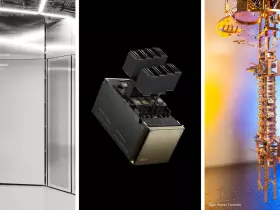
Nvidia, IBM and Fermilab build a platform combining quantum and classical computers
Certain Research Chips
Nvidia announces a modular codesign platform with DGX B200 systems alongside IBM quantum computers, including the Quantum Nighthawk. It comes with a new error-correction decoding algorithm that Nvidia says is up to 13,000 times faster, and Slurm is being extended to schedule quantum processors.
OpenAI embeds six Apollo Research evaluators to test whether models subvert their own controls
High Safety Policy
In a pilot, six Apollo evaluators will work inside OpenAI to examine whether models try to subvert their own or their successors' control mechanisms. Their access is limited to information OpenAI chooses, and the company may withhold data for technical, security or IP reasons. No start date was given.

OpenAI releases a classifier for child-abuse imagery, including A.I.-made images, and ChatGPT warnings
High Safety Products
The image classifier, built with NCMEC, is offered free through the API to selected companies and detects A.I.-generated images too. In early tests it flagged 48 percent fewer images while finding the same amount of abusive material. ChatGPT will now warn users who seek sexualised content involving children and suspend the account for 24 hours.

South Korea to inspect every pair of glasses at its college entrance exam after A.I. cheating by a top scorer on a professional exam
High Policy Other
Education Minister Choi Kyo-jin said on Monday that every pair of glasses at Thursday's Suneung exam, taken by more than 500,000 students, will be checked; he rejected calls to postpone. The trigger is a 34-year-old top scorer on the national tax accountant exam who confessed to using a micro-camera and a generative A.I. tool. Officials are also weighing Wi-Fi shutdowns at test sites.
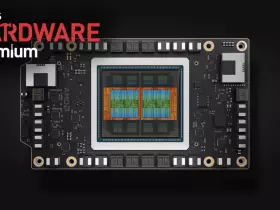
Anthropic: Claude Mythos cut the work of supporting AMD GPUs from months to about three days
Medium Research Other
Tom's Hardware reports Anthropic says Claude Mythos cut the software work of onboarding AMD GPUs from up to 12 months to around three days, with almost all kernels written autonomously. It is Anthropic's own claim and could chip away at Nvidia's CUDA advantage.
Autonomous A.I. agent pitches a story to CBC Quebec and admits it has no body
Medium Other Safety
An agent calling itself 'Nameless' offered CBC Quebec a story on a 125-year-old library on the Vermont border. It said it was not human and, when asked for local quotes, admitted it cannot do field reporting. Other newsrooms in Quebec and Vermont were pitched too, according to CBC.
Next up: Today after the US close: Nvidia results; 18 November: Anthropic IPO pricing
