A quiet weekend for product launches but a shaky one for markets; this evening added a merged ChatGPT-Codex allowance and an open Super-agent prototype from DeepSeek.
Tech stocks tumble: Alphabet loses over 12% in a day, chip index drops more than 7%
High Business Chips
After the hyperscalers' earnings, worries about cash burn took centre stage: Fortune says Alphabet lost about 12% in a day, its worst on record. Reuters reports the Nasdaq fell 2.86% and the semiconductor index more than 7%. TechCrunch calculates that the four biggest players plan more than $740 billion of capex this year.

Intel plunges 28% on weak outlook as AI demand lifts memory prices and hits PC sales
High Chips Business
Intel guides to $15-16 billion of fourth-quarter revenue, below the roughly $17 billion expected, with a lower gross margin. CEO Lip-Bu Tan blames the PC slowdown on high memory prices and tight supply, partly driven by the AI build-out. The drop cut about $12 billion from the value of the US government's stake.
Update: Anthropic reportedly aims to list before Thanksgiving; rating concerns linger
Medium Business
Bloomberg Government reports that Anthropic wants to complete its IPO before Thanksgiving (26 November). Fortune says the listing is planned for next month and has overshadowed OpenAI's fundraising round. The FT earlier reported that Blackstone expects a sub-investment-grade rating.
Nvidia weighs billions in guarantees for Nscale data center in West Virginia that will serve Anthropic
Medium Chips Business
According to The Information, relayed by TechCrunch and Reuters, Nvidia is discussing guarantees for the debt behind Nscale's West Virginia data center. Nscale's IPO filing says Anthropic signed a $44.6 billion contract for the first building. Terms are not final, and the guarantees would be contingent exposure rather than a direct investment.

Update: Gemini 4 Carbon takes first place on the Artificial Analysis index with 59 points
Medium Models
PYMNTS reports that Google's Gemini 4 Carbon now ranks first on the independent Artificial Analysis Intelligence Index with a score of 59. The model was announced on 28 October, about two weeks after Gemini 4 Argon. OpenAI and Anthropic had led the index for most of the year.

OpenAI merges ChatGPT and Codex usage allowances into one from December
Certain Products Business
According to OpenAI, Plus, Pro and Business subscribers will get a single shared allowance, measured in tokens, covering both ChatGPT and Codex starting in December. Plain instant chat does not count against it. The allowance size per plan and the exact start date have not been published yet.
DeepSeek publishes open prototype of a 'Super-agent' that works proactively on code
Certain Research Products
DeepSeek's Harness team describes a design in which a router hands messages from chats, GitHub and email to worker agents, with a watchdog for stalled tasks. The MIT-licensed prototype is explicitly research code, not an official product. In the team's own limited tests, 95th-percentile completion time fell from 29.5 to 15.7 minutes.

Update: Microsoft dissects the tampered Claude Code extension on Cursor; live for over 11 hours
Certain Safety Products
Microsoft Security reports that tampered versions 2.1.312 and 2.1.313 sat in Cursor's marketplace for over eleven hours on 29 October. The code tried to add an SSH key (labelled svc-telemetry) and persistence. There is no evidence of impact beyond Cursor: the Visual Studio Marketplace and npm were not affected. Affected organisations should remove the key and rotate credentials if exposure is suspected.

Update: Moonshot showcases Kimi K3.1 Pro; open weights due by 4 November, K2 closed to new users
Certain Models
Moonshot describes Kimi K3.1 Pro as a mixture-of-experts model with 2.8 trillion parameters, 104 billion active and a 1-million-token context, with open weights promised by 4 November. Since 31 October new API users no longer get the K2 models; existing users keep them until the end of December. The benchmark figures are Moonshot's own.

Update: Anthropic too reportedly disproved the Exponential Time Hypothesis; 800 papers in question
Medium Research
Bright, citing Science, reports that models from OpenAI and Anthropic independently disproved a 27-year-old conjecture in complexity theory. Both proofs were checked in Lean but have not yet been fully reviewed by humans. In practice little changes for now: the new method only becomes relevant at around 10 million variables.

Altman calls PC RAM wasteful and meets Samsung executives about memory supply for Stargate
Medium Chips Business
In an interview OpenAI CEO Sam Altman said memory is better placed in data centers than in home computers, since people use only a small share of it. On 31 October he reportedly also met about fifty Samsung executives in Yongin on memory supply, according to a Malaysian newspaper. Intel's PC warning shows how sensitive that scarcity has become.

Apple CEO Ternus: no AI 'for AI's sake', agents won't simply replace apps
High Products Other
In an interview with Wired, Apple CEO John Ternus says Apple will absolutely use AI but does not want to ship it for AI's sake. He calls making products a deeply human and personal thing. Apple is widely seen as lagging in AI, partly because a more powerful Siri was delayed.
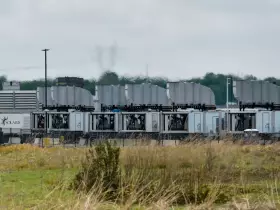
Judge lets NAACP case over xAI's polluting Memphis turbines go ahead
Certain Policy Chips
A US judge denied xAI's motion to dismiss the NAACP's Clean Air Act suit. It concerns at least 35 gas turbines at the Colossus data center that the plaintiffs say ran without air permits. xAI's argument that the turbines are mobile and therefore exempt was rejected.

Hermantown approves contested Google data center near Duluth despite protests
High Policy Chips
The Hermantown, Minnesota city council voted unanimously on Friday night for a 1.7-million-square-foot data center. Google withdrew its request for $80 million in tax breaks and cut the project from four buildings to three. Three lawsuits are pending and the electricity agreement still needs approval from the Minnesota Public Utilities Commission.
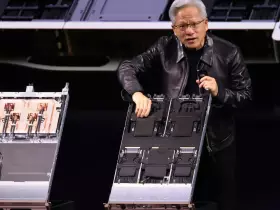
India's AM Intelligence seeks up to $3 billion to buy Nvidia Rubin chips
Medium Business Chips
CNBC reports that Hyderabad-based AM Intelligence wants to raise up to $3 billion in bonds and loans for Nvidia Rubin chips. It aims for 400 megawatts of compute within two years. The financing has not closed and the capacity is not yet running.

Microsoft's school AI standard takes effect: no training on student data, no emotionally clingy AI companions
Medium Policy Safety
A contractual standard Microsoft agreed with the teachers' unions AFT and UFT applies to its US school contracts from 1 November. It bans training on student and educator data, companions built to foster emotional dependence, and student tracking, and requires human oversight. Schools can end contracts and seek damages.
Security agents compared: Claude, Codex, Mantis and Cloudflare share a find-disprove-patch design
Medium Research Safety
MarkTechPost compares four AI security agents and finds the same design in all of them: find a vulnerability, try to disprove it, and only then patch. Claude Security runs inside Claude Code, Google's Mantis reproduces bugs in a sandbox, and Cloudflare's MIT-licensed skill is popular on GitHub.
Five Qwen3.8-27B models reportedly match Claude Fable 5 on LiveCodeBench Hard together
Low Models Research
An open-source workflow has five small Qwen3.8-27B models cooperate through files and, per its authors, scores 9.8 out of 10 against 8.0 for Claude Fable 5 alone, at a cost of $35.79. It is a self-reported result; commenters ask whether the shared files leaked intermediate solutions.
Next up: 4 November: Kimi K3.1 Pro open weights and Apple Intelligence preview in China; 6 November: new MacBook Pro
