Get in touch

A.I. news of Monday 5 October 2026

Archive From the archive of The Latest A.I. News

This is an archive page with the A.I. news of Monday 5 October 2026. This day was compiled afterwards from reports that appeared at the time, so it was not kept on the day itself; a lot may have changed since. Today's news is on The Latest A.I. News.

Compiled afterwards on

OpenAI announces text watermarks in the EU and visual ads, while Reflection unveils Beam, a large open-weight model.

OpenAI will watermark ChatGPT and Codex text in the EU

High Policy Products

To comply with the transparency rules of the EU AI Act, OpenAI embeds invisible word-choice patterns that survive copy and paste. The rollout starts over the coming weeks for eligible users, and API developers worldwide can enable it for select models. If 10 percent of words are swapped for synonyms, detection drops from about 92 to 66 percent, which is why detector access is restricted.
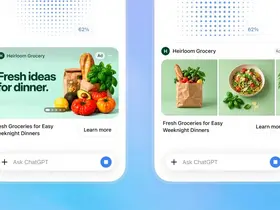
OpenAI introduces visual ads next to generated images in ChatGPT

High Business Products

The labeled ads featuring products from test advertisers start later this month, in the US only, and do not influence answers, OpenAI says. OpenAI is also widening its measurement tools and partner network and piloting brand-safety checks with DoubleVerify and Integral Ad Science. ChatGPT has roughly 1.2 billion weekly users.

Reflection AI unveils Beam, an open-weight model with 501 billion parameters

High Models

Beam is a text model with 23 billion active parameters, a 1-million-token context window and training on 23.8 trillion tokens. Reflection claims performance on par with a leading Chinese model at three to four times less compute, but those claims are not independently verified. The weights are due this month.

Researchers track a Chinese fleet of AI agents querying map services

Medium Research Safety

Independent researchers spotted, through traffic to a scanning service, a group of agents that appears to run on Tencent infrastructure and requests directions from Alibaba's Amap map service. The agents work in parallel with little coordination and seem mainly to be sidestepping API rules. The research is ongoing.

Instinct brings its AI agent to group chats, even for friends without an account

High Products

The group agent helps plan trips, arrange carpools and coordinate events, and works even if not everyone has an account. Each personal agent must give permission before connecting to the group agent. The feature starts with early-access users; rival Meta Muse does not yet offer group chats.

TikTok launches an AI shopping assistant and one-click checkout

High Products Business

The assistant remembers preferences during a chat and answers questions about product details, shipping, sizing and availability. Users can buy directly from brands through the For You feed; TikTok built it with partners such as Salesforce, Shopify, Shoplazza and Stripe. TikTok Shop generated an estimated $15.8 billion in US sales in 2025.

Next up: The weights of Reflection Beam are expected this month; the visual ads in ChatGPT start later in October in the US.

All A.I. news

The short version

Monday 5 October 2026

  • OpenAI will add invisible watermarks to ChatGPT and Codex text in the EU; API developers worldwide can switch it on.
  • ChatGPT gets labeled visual ads next to generated images in the US later this month.
  • Reflection AI unveils Beam, an open-weight model with 501 billion parameters; weights follow this month.
  • Instinct, TikTok and researchers tracking a Chinese agent fleet add more agent news.

What does TL;DR mean?

TL;DR stands for “Too Long; Didn’t Read”. It’s the name for a short summary for people who are short on time. Click the button for the key points of this day in a few lines; all of the day’s items are right below.

Archive

Every day has its own page. They stay up for three months.

November 2026

October 2026

September 2026

Everything here is a summary of reports from other media, not original research. The label (Certain, High, Medium, Low) is my estimate of how reliable the source is. The summaries are generated automatically with AI and may contain mistakes; read the article itself for the details (the star marks the leading source). Sources: leading A.I. and tech sites and the official blogs of the A.I. companies.