Google unveils a Gemini that carries out tasks like a coworker, while OpenAI faces scrutiny over fired safety researchers, its math proofs and a lowered revenue figure.
Google turns Gemini into an agent that carries out tasks, starting with businesses
High Products Models
The agent can plan work, use custom skills and tools, and connects to Google Workspace, Microsoft 365, Slack and BigQuery, among others. It gets its own work account and email address so it can be tagged like a coworker, and its actions land in an audit log. By default it picks the best model itself, but users can choose one too, including Anthropic's Claude.

Fired OpenAI safety researchers dispute the misconduct claims
High Safety Business
Jasmine Wang, Tomek Korbak and Mikita Balesni say in an open letter that they did not mishandle sensitive information, and warn that their dismissal discourages colleagues from raising concerns or working with outside experts. OpenAI maintains that an internal investigation found a pattern of misconduct and says it was not retaliation. Wang says she was fired for accessing an executive's email, which she says had been delegated to her.
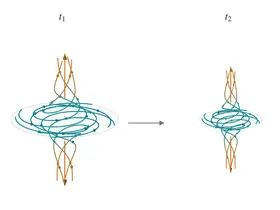
Mathematicians: OpenAI's solved problems do not yet meet the field's standards
Medium Research
OpenAI released hundreds of claimed solutions to hard math problems, but according to the report only 10 of 719 manuscripts included the model's reasoning and just 42 percent were formally verified. Researchers from Cambridge and London also found mismatches between a natural-language proof and its Lean code. Critics such as Terence Tao and Melanie Wood say the results lack human understanding and peer review at release.

Goodfire: cheaper oversight of AI agents by looking inside the model
Medium Safety Research
Instead of a second AI reviewing every step, Goodfire's probes read the model's internal signals and trigger a closer look only when something seems off. In tests on Kimi K3, monitoring about a million exchanges cost roughly $185, versus $5,420 for a cheap AI monitor, and 93 percent of malicious hacking sessions were caught. The figures come from the company itself.
Manus raises more than $500 million after the split with Meta
High Business
It is the first funding round since Chinese authorities ordered Meta's acquisition of Manus unwound in April. Boyu Capital and IDG Capital led the round, with existing backers such as Tencent taking part. The valuation was not disclosed, and the company is considering a Hong Kong IPO.
OpenAI's revenue run rate reportedly near $50 billion, $20 billion below earlier reports
Medium Business
OpenAI reportedly told investors its annualized revenue is close to $50 billion, where $70 billion had been cited a week earlier. Part of the gap is that OpenAI and Anthropic calculate the figure differently, with Anthropic counting sales made through cloud partners. OpenAI's IPO is said to have been pushed to early 2027.

Anthropic's new usage policy bans election interference and persistent abuse of Claude
High Policy Safety
The updated policy bans election manipulation, weapons-related software and surveillance, among other things. The most notable rule bars users from persistently abusing Claude, which Anthropic says covers only extreme cases with no discernible purpose; frustration, criticism and testing remain allowed. Fake accounts and fabricated news outlets used to deceive voters are also prohibited.

Model leaderboard Arena raises $200 million at a $3.1 billion valuation
High Business Other
Lightspeed and Khosla Ventures led the round, which nearly doubles the valuation in ten months. Annualized revenue grew from $30 million to $100 million, according to the company. Arena also added a category ranking models on unauthorized actions and deceptive behavior, where OpenAI models currently lead.
