Google releases Gemini 4 Argon to a small group of security partners first, and the White House unveils a voluntary AI pledge. Elsewhere, new agents arrive at DoorDash and Instagram and ElevenLabs lets staff sell shares.

Google launches Gemini 4 Argon, first only for selected security partners
Certain Models Safety
The new model is aimed at coding, research and writing but stands out for its cybersecurity skills. For now Google gives access only to partners in its Fairwind program; the company says it can find, verify and fix serious software flaws with little human direction. Google claims higher scores than GPT-6 Astra and Anthropic's models on several benchmarks.

Trump and top AI firms sign voluntary frontier-AI pledge with no penalties
High Policy
The document, the Joint Commitment on Frontier Responsibilities, asks developers to make sure their systems work as intended and to fix problems quickly, for example with an independent oversight board. It is voluntary, so breaking it carries no penalty. The photo Trump shared shows Unites States misspelled; a separate executive order tells agencies to say superintelligence or SI instead of AI.

OpenAI shows Decisions API, a fast model that picks from preset options
Certain Models Products
Sam Altman presented the API at DevDay as a limited preview. Developers supply a list of options and the Luna model returns a probability for each, which makes it very fast. It resembles Jev from TypeSafe AI; one demo used such a model to check agent actions at $2.94 per run versus $372 with a large language model.
ElevenLabs lets staff sell shares at a $22 billion valuation
High Business
Employees can cash in part of their vested shares in a $300 million sale, with large investors such as Wellington and T. Rowe Price buying. The valuation is double that of the February funding round. It is the second such sale, and startups use these to keep staff from leaving.

Meta disputes claim that Muse read private Mac messages without permission
Medium Safety Products
A journalist reported that the Muse agent could read his Messages app on his Mac even though he thought he had switched off full disk access. Meta says the integration is opt-in and both that access and the Messages connector must be enabled. A Meta executive does concede that Muse gave an incorrect explanation; distrust lingers because of Meta's earlier privacy problems.
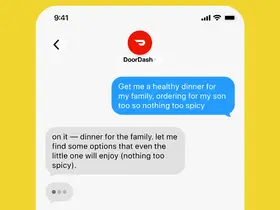
DoorDash launches an AI agent for ordering food by text in Apple Messages
Certain Products
Users can simply text requests such as their usual order and the agent works out which past order is meant. It proposes a cart, can send photos of dishes and accounts for dietary needs in group orders. There is a waitlist in the US.

Instagram adds an AI video assistant to Edits for feedback on creators' own results
Certain Products
The chatbot looks at figures such as views, retention, likes and comments and looks for patterns in how videos perform. It focuses on analysis rather than making content. Usage is capped, with higher limits for Meta One subscribers.

Airbnb adds AI search and more social features to its app
Certain Products
A toggle lets users search by text or voice, after which matching filters appear and wish-list properties can be compared with AI summaries. The update also brings maps of contacts' trips and new services such as meal delivery. The CEO deliberately avoids a chatbot-style interface.

Analysis: consumer AI earns too little to cover its high costs
Medium Business
According to an opinion piece, only about 2.2 percent of consumers paid for AI in May, at roughly $31 a month on average. Even with as many subscribers as Netflix, revenue would stay below a third of OpenAI's operating costs. That is why companies are shifting to business customers, although Meta's ad income lets it wait longer.
