
Blog · Technology
How a fox keeps an eye on my servers
I manage four websites. That works fine, until you do it by hand for three weeks. Then you notice that you keep typing the same ten commands in the same order, each time with the same chance of a slip. People are bad at that. Computers can do it without sighing. So I built Foxhold (Vossenburcht in Dutch): a dashboard on my own Mac that takes over the boring work. It is called Foxhold because everything here has a fox. That is no longer a choice, that is house style.
One button instead of ten commands
I used to build the site, check it, upload it, set the permissions and hope for the best. Now there is one big button that does all those steps in the right order. Just in case there is also a red button next to it that restores the previous version. I rarely have to press it, but it is nice that it is there, like a spare wheel.
Traffic lights, because I’m only human too
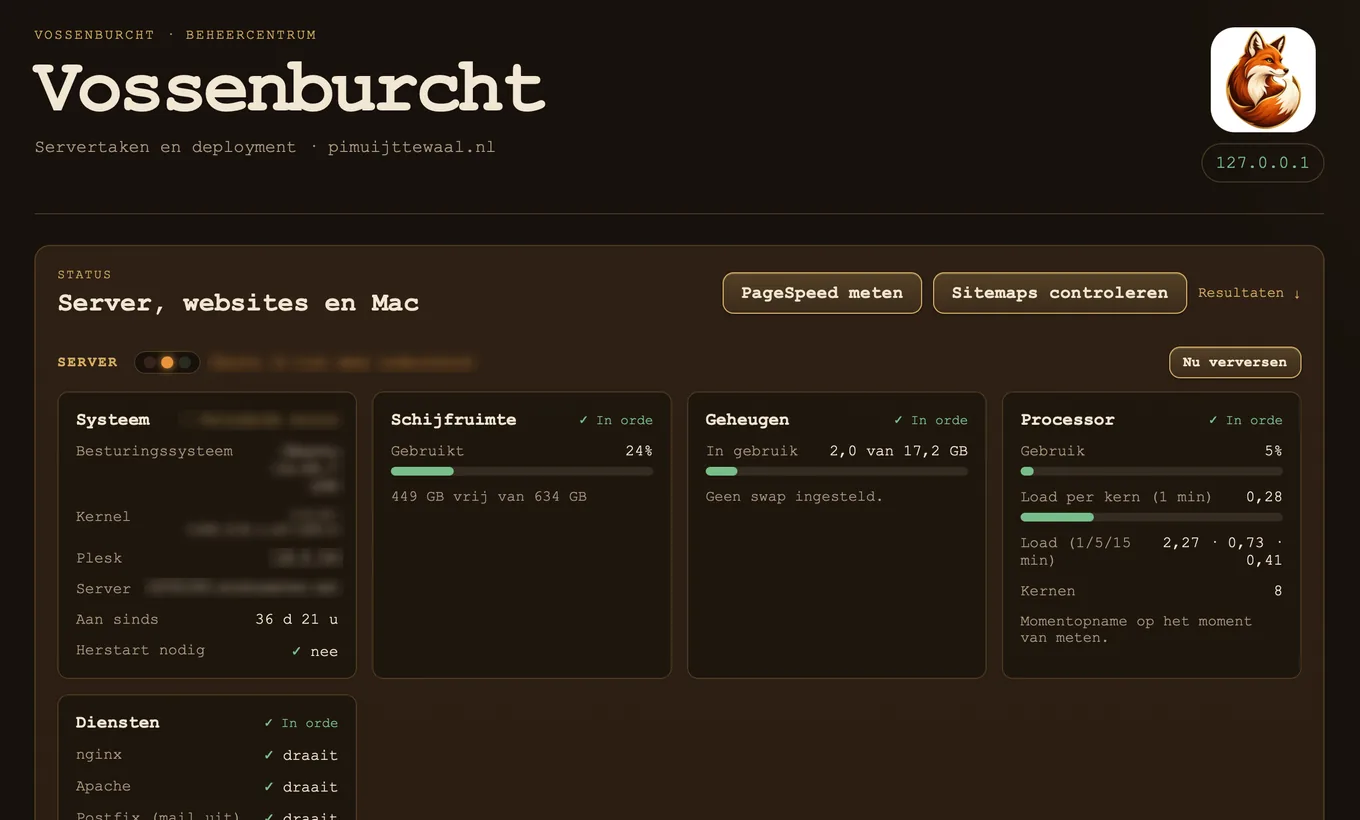
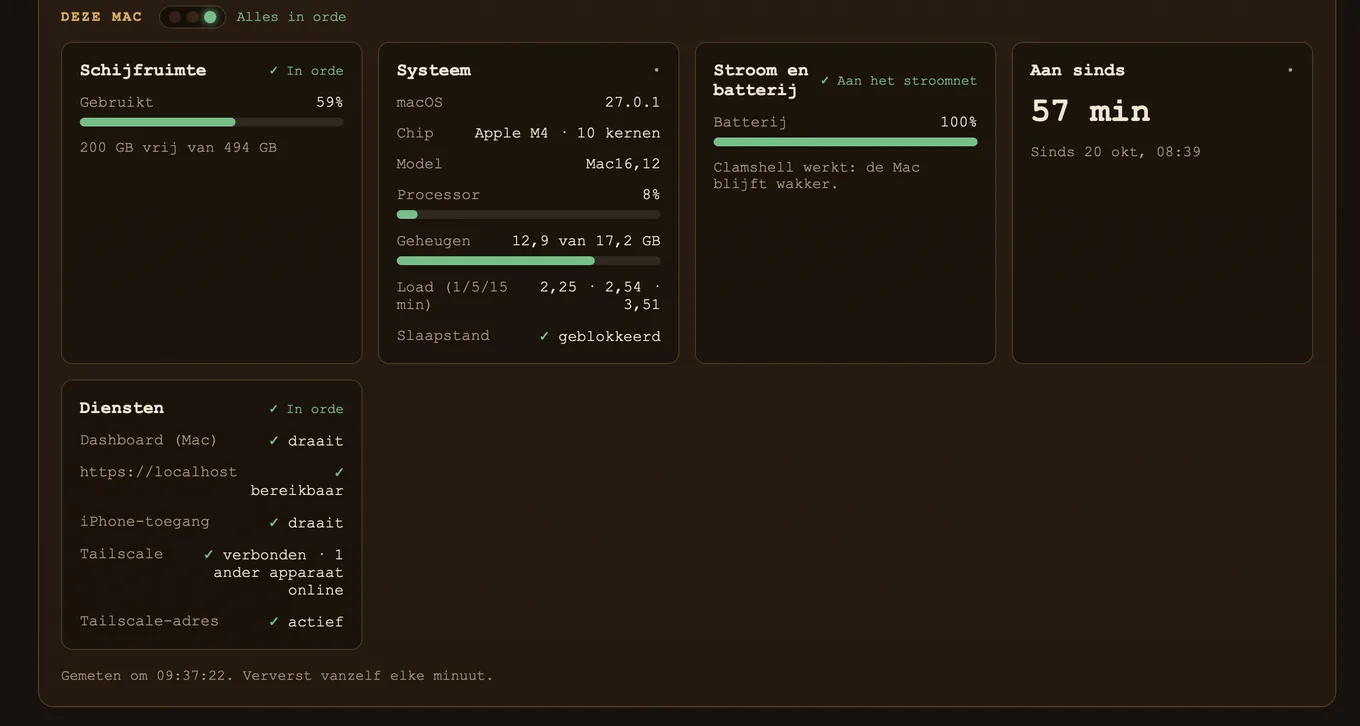
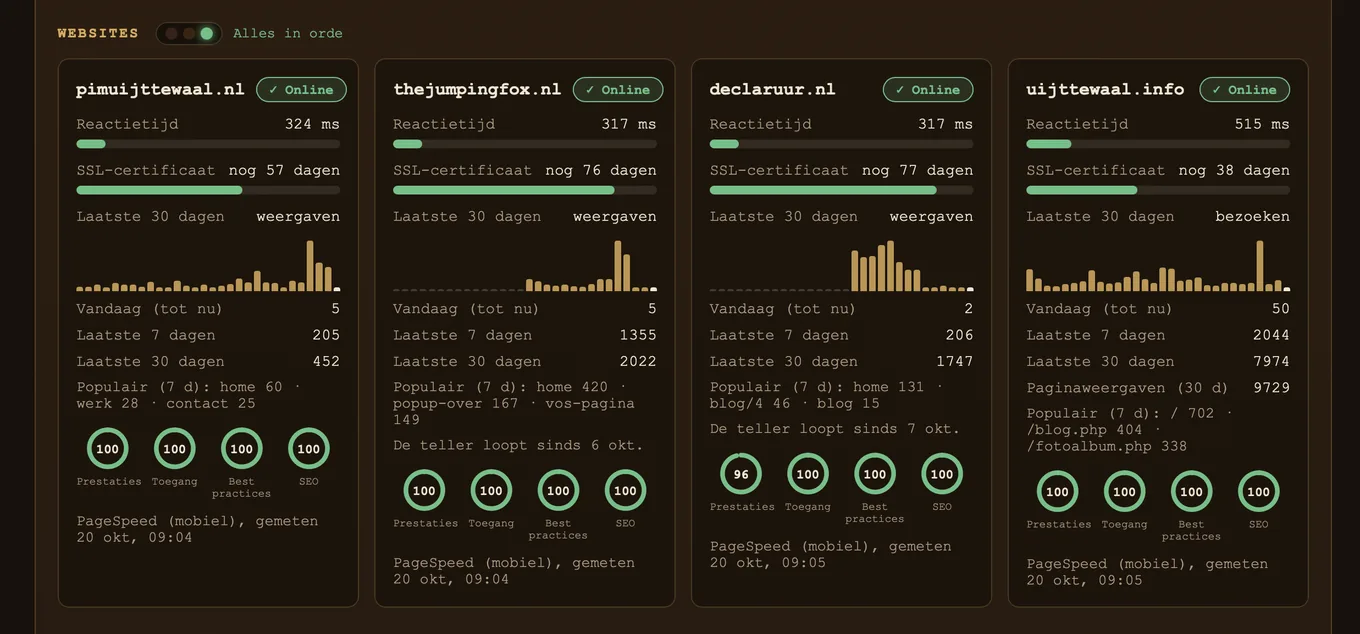
The server, the websites and the Mac each get a traffic light. Green is nice, orange is “take a look” and red is “leave the coffee”. With one glance I know whether I can carry on with my day, or whether the day has a plan of its own.
The mails nobody sees, until they are missing
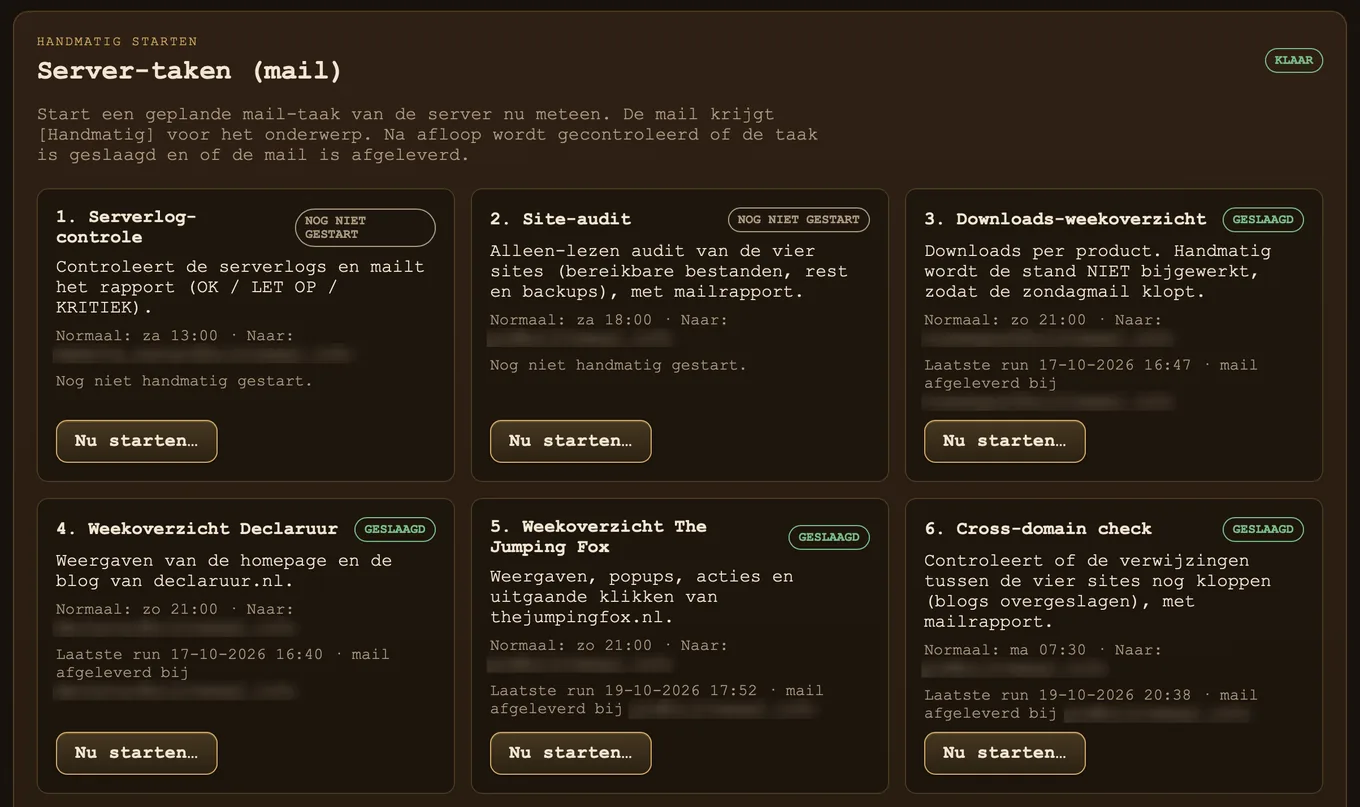
Every week the server sends a few overviews. I used to hope they arrived. Now I start them with one button when needed, after which the dashboard checks whether the mail was really delivered. Trust is nice, checking is better.
On the iPhone too, but in the careful way
Over a secure connection I can watch from the sofa. Only looking and starting tasks; the big buttons deliberately stay on the Mac. A phone in my pocket that accidentally rolls back an entire site is something I would rather rule out. The dashboard is not public and has its own login.
Two inspectors and a warden
One check lets Google judge the speed of my sites. Another walks through every page in the sitemap, like a rather driven visitor who never goes home.
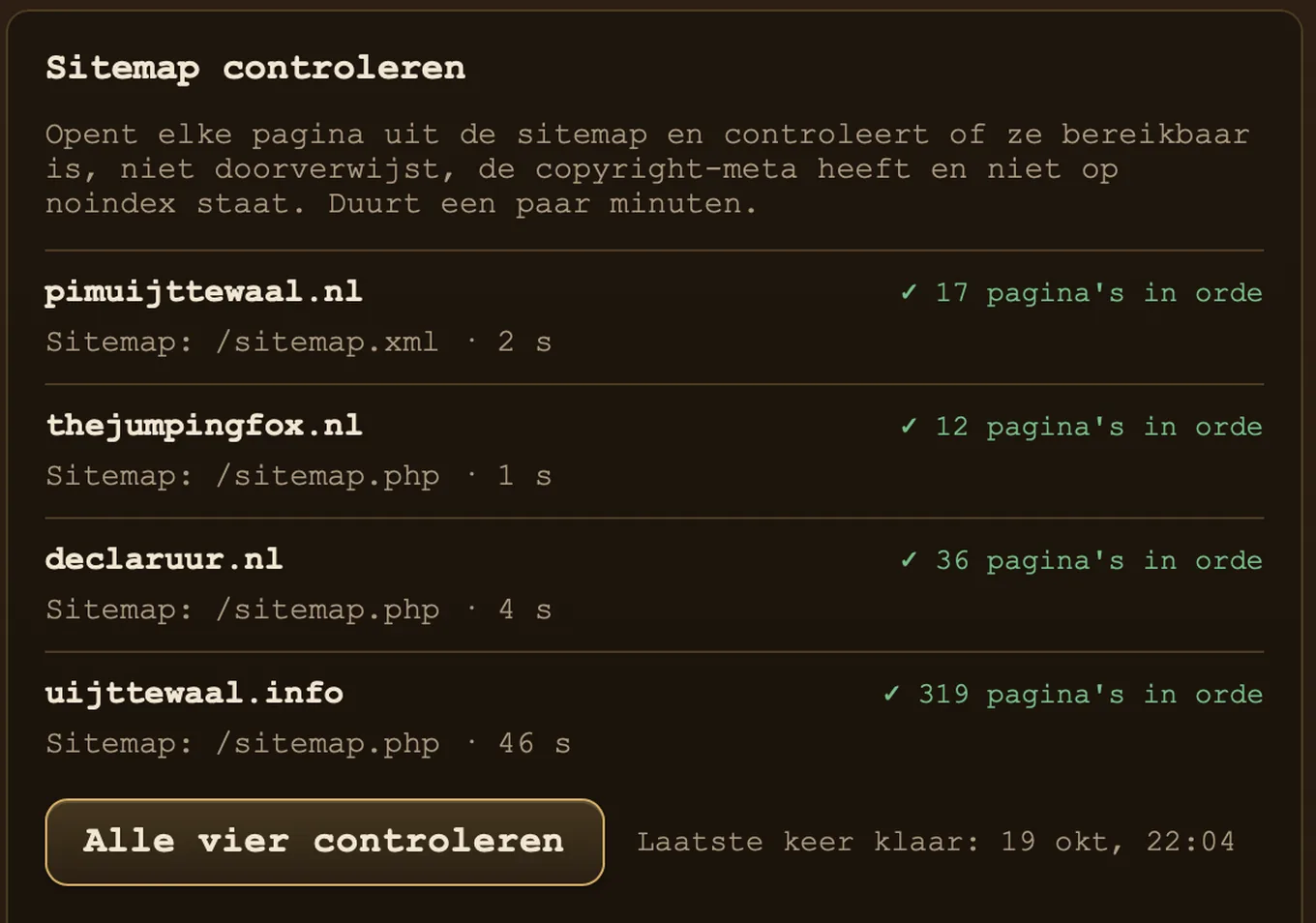
On top of that, a warden on the server checks every hour whether the scheduled mails have arrived. If one is missing, my phone goes off, and every Monday I get a short summary. In the beginning he raised false alarms, because he did not recognise mail sent to an alias. I sent him back to his room, had him practise with real data, and now he does fine.
What I learned
- Small steps. Then you always know where it went wrong.
- Backup first. Rolling back takes seconds, regret takes longer.
- Measure before you improve. A score of 96 instead of 100 turned out to be a bad day for the test server. Measurement noise, not drama.
- Test your guard too. An alarm that cries over nothing is just as annoying as an alarm that stays silent.
The dashboard is never finished, and that is fine. It gives me something that counts: peace of mind. And a fox on guard.
Pim